Delivery apps like DoorDash, Uber Eats, and Instacart advertise earnings of $20-25 per hour. What they don't emphasize is that this is gross pay before expenses. After you subtract gas, vehicle maintenance, self-employment taxes, and the occasional parking ticket, most drivers net between $10-16 per hour. Some do better in high-demand markets; many do worse in oversaturated areas. This guide breaks down where the money actually goes.
The companion book
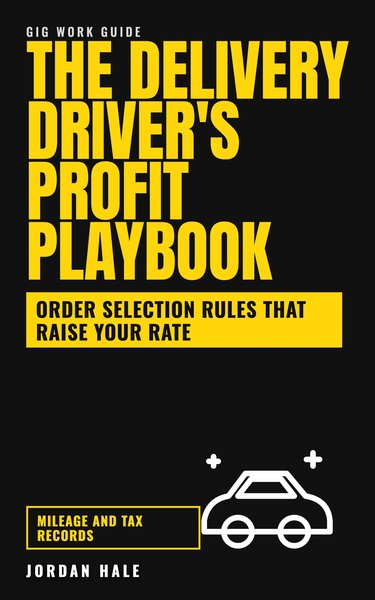
The Delivery Driver's Profit Playbook
by Jordan Hale
How to earn more per hour on DoorDash, Uber Eats, Instacart, Amazon Flex and Walmart Spark, track every mile, and keep more after taxes.
How Delivery App Pay Actually Works
Gig delivery platforms pay per order, not per hour. Your earnings depend on base pay (set by the algorithm), tips (varies wildly), and bonuses (inconsistent). The apps show you "active time" earnings, which only counts time between accepting and completing orders, not the waiting, driving to hotspots, or sitting in parking lots.
Here's the typical breakdown of where gross earnings go:
- Gas: 15-25% of gross, depending on your vehicle's MPG and local fuel prices
- Vehicle wear: $0.10-0.15 per mile for tires, oil changes, brakes, and eventual repairs
- Self-employment tax: 15.3% of net profit (Social Security + Medicare)
- Income tax: Varies by bracket, but plan for 10-22% on top of SE tax
- Phone/data: $50-100/month if you need an upgraded plan
- Insurance gap: Personal auto policies often don't cover commercial delivery
What to Realistically Expect
- Time required: Most part-timers work 10-20 hours per week. Full-time drivers typically log 40-50 hours to hit income targets, though "active hours" may only count for 60-70% of that.
- Earnings range: Gross $15-28/hour depending on market and timing. Net after all expenses: $10-16/hour is typical. Top 10% in good markets might net $18-20/hour.
- Main tradeoffs: Maximum flexibility but zero benefits, unpredictable demand, and vehicle depreciation that compounds over time.
Time Commitment and Schedule Reality
The flexibility is real, you can log on whenever you want. But earning consistent money requires working when demand exists: lunch (11am-1pm), dinner (5pm-9pm), and weekends. Weekday afternoons and late nights are often dead.
What the apps don't count as "work time":
- Driving to your delivery zone
- Waiting for orders during slow periods
- Returning from a delivery to a busy area
- Time spent declining low-pay orders
If you work a 4-hour dinner shift, you might only have 2.5-3 hours of "active" paid time. This is why your actual hourly rate is lower than the app displays.
Income Ranges and What Affects Them
| Factor | Lower Earnings | Higher Earnings |
|---|---|---|
| Market | Suburban, oversaturated | Urban, high-demand |
| Vehicle | SUV, 18 MPG | Hybrid/EV, 45+ MPG |
| Hours | Random, off-peak | Peak lunch/dinner |
| Strategy | Accept everything | Cherry-pick $2+/mile |
| Multi-apping | Single platform | 2-3 apps simultaneously |
Net hourly ranges by scenario: A driver in Phoenix with a Prius working dinner shifts might net $16-18/hour. A driver in a small town with an older truck working random hours might net $8-11/hour. Same gig, very different outcomes.
Calculate Your Actual Earnings
Use our free calculator to see what you'd actually take home based on your vehicle, market, and hours.
Open Earnings CalculatorCommon Pitfalls
Ignoring vehicle depreciation
Putting 30,000 extra miles per year on your car accelerates depreciation significantly. A $20,000 car might lose $4,000-6,000 in value annually from delivery use alone.
Not tracking expenses
Without tracking, you'll overestimate earnings and underpay quarterly taxes. The IRS mileage deduction (72.5 cents/mile from 1/1 to 6/30/2026, 76 cents/mile from 7/1 to 12/31/2026, source: irs.gov) can significantly reduce your tax burden, but only if you log miles.
Chasing surge pricing
Driving 20 minutes to a "busy" zone often means the surge ends before you arrive. Staying in familiar areas usually nets more than chasing bonuses.
Insurance gaps
Standard auto insurance typically excludes commercial delivery. If you're in an accident while delivering, your claim could be denied. Rideshare/delivery endorsements add $20-50/month.
Frequently Asked Questions
Can you make money doing delivery?
Gross, yes, working 40-50 hours in a decent market. Net after expenses, you're looking at $600-750 in most cases. Hitting $1,000 net requires 50+ hours in a high-demand area with an efficient vehicle.
Which delivery app pays the most?
It varies by market. Instacart often has higher per-order pay but fewer orders. DoorDash has volume but lower base pay. Most experienced drivers run 2-3 apps and take the best available order.
Is delivery driving worth it as a side hustle?
It depends on your alternatives. If you have a fuel-efficient car, flexible schedule needs, and no better-paying options, it can work for supplemental income. If you're choosing between this and a part-time W-2 job paying $15+/hour with benefits, the W-2 often comes out ahead after expenses.
How much should I set aside for taxes?
25-30% of your net profit (after expenses) is a safe estimate for combined self-employment and income taxes. Pay quarterly to avoid penalties.
What's the best car for delivery driving?
Hybrid sedans like the Toyota Prius or Honda Insight offer the best balance of fuel efficiency (45-55 MPG) and reliability. Electric vehicles can work in urban areas with good charging infrastructure but range anxiety and charging downtime can cut into earnings. Avoid trucks and SUVs unless you're doing large-item or furniture delivery.
How do I track mileage for taxes?
Use an app like Stride, Everlance, or MileIQ that automatically tracks drives. The IRS requires contemporaneous records, a log written at the time of the drive, not reconstructed later. Track every delivery mile; the 2026 deduction (72.5¢/mile 1/1 to 6/30/2026, 76¢/mile 7/1 to 12/31/2026, source: irs.gov) typically reduces your taxable income by 40-60%.
Should I multi-app?
Multi-apping (running DoorDash, Uber Eats, and others simultaneously) is common among experienced drivers. It reduces downtime between orders and lets you cherry-pick higher-paying deliveries. The tradeoff: more mental load, higher risk of late deliveries, and some platforms may deactivate drivers who consistently have late orders.
Related Guides
DoorDash Driver Guide
Platform-specific strategies and market tips.
Instacart Shopper Guide
How grocery delivery differs from food delivery.
Amazon Flex Guide
Package delivery blocks and route strategies.
Best Delivery Apps 2026
Platform comparison by market and vehicle type.
DoorDash vs Uber Eats vs Grubhub
Complete platform comparison for drivers.
Side Hustle vs Part-Time Job
When gig work beats traditional employment.
