The companion book
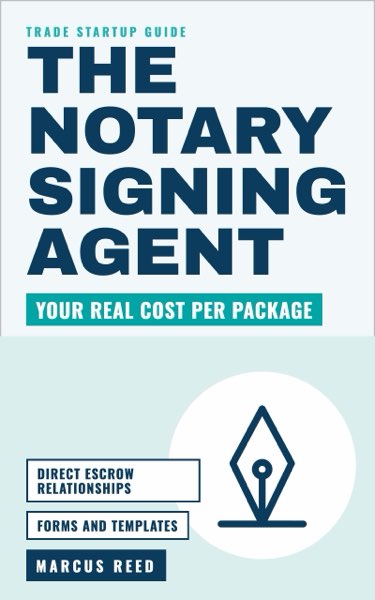
by Marcus Reed
How to start a loan signing business: what signing services pay, your cost per package after printing and mileage, and the legal line you cannot cross.
What Is a Notary?

A notary public is an official appointed by state government to serve as an impartial witness to the signing of important documents. Notaries verify the identity of signers, ensure they're signing voluntarily, and authenticate documents with their official seal. This seemingly simple role is essential to legal, financial, and real estate transactions.
The notary side hustle has gained significant popularity because it offers excellent earning potential with flexible hours and low startup costs.
The Loan Signing Agent Opportunity
With millions of mortgages originated annually, there's constant demand for notaries who can facilitate loan closings. Each refinance, purchase, or home equity loan requires a notary. Loan signing agents are often needed evenings and weekends, perfect for side hustlers with day jobs.
The work is straightforward once you're trained: meet with borrowers at their home or a neutral location, guide them through signing 100-150 pages of loan documents, notarize the required signatures, and return the completed package. A typical signing takes 45-90 minutes plus travel time.
Types of Notary Work
Notary work spans multiple specialties, each with different requirements and earning potential:
Loan Signing Agent
Handle mortgage loan closings for refinances, purchases, and HELOCs. The most lucrative notary specialty requiring additional training and certification.
Earnings: $75-$200 per signing
General Notary Work
Notarize various documents: powers of attorney, affidavits, contracts, car titles, and more. Often combined with mobile notary services.
Earnings: $5-$15 per signature + travel fee
Mobile Notary
Travel to clients for notarizations at their home, office, hospital, or other location. Charge travel fees in addition to notary fees.
Earnings: $25-$75 per appointment
Remote Online Notarization (RON)
Perform notarizations via video call using approved platforms. Growing rapidly, work from home without travel. Requires state authorization.
Earnings: $25-$150 per session
Hospital/Jail Notary
Specialize in notarizations at hospitals, nursing homes, or correctional facilities. Often urgent with premium pricing. Can be emotionally challenging.
Earnings: $50-$150 per visit
Immigration Notary
Assist with immigration-related documents. Requires understanding of specific requirements. Strong demand in diverse communities.
Earnings: $10-$25 per document

Becoming a Notary
The path to becoming a notary varies by state, but the general process is straightforward:
Check Your State Requirements
Requirements vary significantly. Visit your state's Secretary of State website for specific rules. Generally you must be 18+, a legal resident, have no felony convictions, and be able to read/write English.
Complete Required Training
Some states require completing an approved notary education course (typically 3-6 hours). Others have no training requirement. California, for example, requires a 6-hour course and exam.
Pass the Exam (If Required)
About half of states require passing a notary exam. These are typically straightforward tests covering notary laws and procedures. Study materials are provided with training courses.
Purchase Your Bond
Most states require a surety bond (typically $5,000-$15,000 in coverage). You pay a small premium, usually $30-$100 for a 4-year term. This protects the public from notary errors.
Submit Your Application
File your notary application with the Secretary of State, including your bond, any certificates of completion, and the application fee ($20-$100). Processing takes 2-6 weeks.
Get Your Supplies
Once commissioned, purchase your official notary stamp/seal and journal. Some states have specific requirements for stamp format. Total supply cost: $50-$150.
Loan Signing Agent Training

Becoming a notary is just the first step. To access the lucrative loan signing market, you need additional training and certification:
NNA Loan Signing Agent Certification
The National Notary Association's certification is the industry standard. Includes training course, exam, and background check.
- Cost: $197-$299
- Time: Self-paced online course
- Includes: Training, exam, background check
- Recognition: Widely accepted by signing services
Loan Signing System
Mark Wills' comprehensive training program is popular among signing agents. Includes business-building strategies and marketing.
- Cost: $97-$497
- Time: Self-paced online course
- Includes: Training, scripts, marketing
- Focus: Practical business building
What You'll Learn
- Loan Document Knowledge: Understanding the 100+ pages in a typical loan package
- Signing Procedures: Proper order, initials, dates, and signature requirements
- Common Errors: How to catch and correct mistakes before they cause problems
- Legal Boundaries: What you can and cannot explain to borrowers
- Professional Conduct: Handling difficult situations and maintaining neutrality
Critical Note: Know Your Limits
As a loan signing agent, you can EXPLAIN documents but cannot ADVISE. Never tell borrowers whether to sign, that's legal or financial advice. If asked about rates, terms, or whether a loan is good, direct them to their lender or attorney.
Equipment & Supplies
A professional notary needs the right tools. Here's your complete equipment list:
Required Supplies
- Notary Stamp/Seal: $20-$50
- Notary Journal: $15-$30
- Thumbprint Pad: $5-$15
- Blue Ink Pens: $10-$20
- Highlighters: $5-$10
- Sticky Flags/Tabs: $10-$15
Professional Extras
- Portable Printer: $150-$300
- Laptop/Tablet: For e-docs
- Professional Bag: $30-$50
- Phone/Hotspot: For connectivity
- Business Cards: $20-$50
- Document Clipboard: $10-$20
Total Startup Investment
Finding Work
Building a steady stream of signing assignments requires working multiple channels:
Signing Services
Companies like Snapdocs, Notarize, SigningOrder, and others connect you with lenders needing signings. Register with multiple services to maximize opportunities.
Pros: Steady work, easy to get started | Cons: Lower fees (they take a cut)
Title Companies
Build direct relationships with local title companies and escrow offices. They handle real estate closings and need reliable notaries. Higher fees and repeat business potential.
Pros: Better pay, direct relationships | Cons: Requires marketing effort
Notary Directories
List yourself on 123notary.com, NotaryRotary, Notary.net, and state notary directories. Clients search these when they need mobile notary services.
Pros: Passive lead generation | Cons: Competition, listing fees
Local Marketing
Connect with real estate agents, attorneys, financial advisors, and senior centers. Network at local business events. Leave cards at banks and law offices.
Pros: Premium clients, direct relationships | Cons: Time-intensive
Online Presence
Create a Google Business Profile, simple website, and social media presence. Many people search "notary near me" when they need service urgently.
Pros: Local visibility, credibility | Cons: Setup time required
Pricing Your Services

Understanding notary pricing helps you set competitive rates and maximize earnings:
| Service Type | Typical Rate | Time Required |
|---|---|---|
| Loan Signing (Refinance) | $100-$175 | 45-75 min + travel |
| Loan Signing (Purchase) | $125-$200 | 60-90 min + travel |
| Reverse Mortgage | $150-$250 | 90-120 min + travel |
| General Notarization | $25-$75 | 15-30 min + travel |
| Mobile Notary (per trip) | $50-$100 | Varies |
| After-Hours/Weekend | +$25-$50 | Premium timing |
State Fee Limits
Many states cap what notaries can charge per notarization (often $5-$15 per signature). However, you can charge additional travel fees, convenience fees, and service fees. Loan signing agent fees are typically set by the signing service or lender, not state limits.
The Signing Process
A successful loan signing follows a consistent process. Here's what to expect:
1. Accept the Assignment
Receive signing details from signing service or title company. Confirm date, time, location, and fee. Download and review documents if sent in advance.
2. Confirm with Borrowers
Call borrowers 24 hours before to confirm appointment. Remind them to bring valid ID. Answer any procedural questions (not advice!).
3. Prepare Your Package
Print documents if required (some are e-sign). Organize in signing order. Flag pages requiring signatures/initials. Prepare your journal and stamp.
4. Conduct the Signing
Verify borrower identity. Explain each document's purpose (briefly). Guide through signatures, initials, and dates. Maintain neutrality, never advise.
5. Complete & Return
Notarize required documents. Record in your journal. Separate borrower copies. Ship completed package via overnight carrier (usually FedEx/UPS) same day or next morning.
Remote Online Notarization (RON)

Remote Online Notarization allows you to notarize documents via video call, no travel required. It's a growing opportunity, especially post-pandemic:
Benefits of RON
- Work from home, no travel
- Serve clients anywhere in your state
- Flexible scheduling
- Complete more signings per day
- Lower overhead costs
Requirements
- State must authorize RON
- Additional RON training/certification
- Platform subscription (Notarize, SignNow, etc.)
- Reliable internet and quiet workspace
- Quality webcam and microphone
RON State Availability
Most states now allow RON, but requirements vary. Popular RON platforms include Notarize, Pavaso, NotaryCam, and SignNow. These platforms handle compliance and provide the technology, you just need to get certified and process signings.
Notary Income Calculator
Results vary; these are estimates, not guarantees.
Scaling Your Notary Business
Once established, multiple paths exist for growing your notary income:
Increase Volume
Register with more signing services. Build title company relationships. Expand your service area. Accept same-day and rush assignments for premium fees.
Add RON Services
Remote notarization means no travel time. Complete 3-4 RON sessions in the time one mobile signing takes. Work evenings from home while family sleeps.
Specialize in Premium Signings
Reverse mortgages pay more and take longer. Hospital signings command premium fees. After-hours and weekend signings earn bonus rates.
Build Direct Relationships
Move from signing services (lower fees) to direct title company relationships (higher fees). One good title company relationship can provide steady work.
Frequently Asked Questions
General notary work pays $5-$15 per signature. Loan signing agents earn $75-$200 per signing appointment, with experienced agents completing 2-4 signings per day.
Requirements vary by state but typically include: being 18+, passing a background check, completing state-required training (if applicable), passing an exam (in some states), purchasing a notary bond and supplies, and submitting an application to your Secretary of State. The process takes 2-6 weeks and costs $50-$300 depending on your state.
A notary public is authorized to witness and authenticate signatures on documents. A loan signing agent is a notary who specializes in mortgage loan closings, guiding borrowers through signing their loan documents. Loan signing agents earn significantly more per appointment but require additional training and certification.
Yes, notary work offers flexible scheduling, low startup costs, and good earning potential. As a loan signing agent, you can earn money of work. The job requires minimal ongoing expenses and can be done evenings and weekends around other commitments.
The entire process typically takes 2-6 weeks depending on your state. Training courses can be completed in a day. Application processing varies by state, some approve within days, others take several weeks. Add another week to get your supplies ordered and delivered.
E&O insurance isn't always legally required but is highly recommended, especially for loan signing agents. Many signing services require it. E&O insurance protects you from claims arising from errors in your notarial duties. Policies typically cost $30-$100 per year for $25,000-$100,000 in coverage.
Ready to Become a Notary?
Low startup costs, flexible hours, and solid earning potential make notary work an ideal side hustle for detail-oriented professionals.
Explore More Side HustlesEssential Gear for Side Hustlers
As an Amazon Associate, we earn from qualifying purchases.
- →Dash Cam Document your work and protect yourself
- →Car Phone Charger Stay connected on the go
- →Portable Power Bank Never run out of battery
- →Phone Mount Hands-free navigation

An all-in-one card machine that takes tap, chip and swipe on the spot and prints a receipt, so you get paid before you leave the job.
See it on Amazon →